|
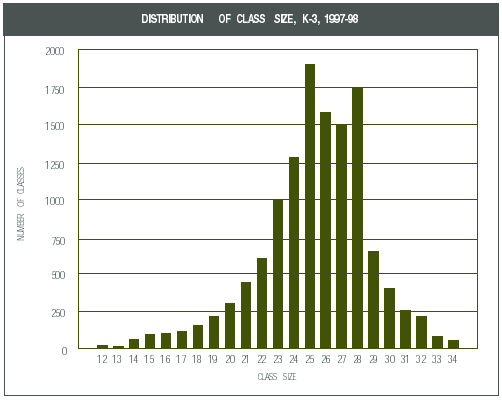
Among kindergarten classes for example -where the citywide average is 24 students per class, as of October 1997-classes in District 1 in Manhattan had an average of 21 students, while District 17 in Brooklyn had 26. Of the 32 community school districts, large classes are concentrated in five: Bronx District 10 in the northwest Bronx; Brooklyn District 17 in Crown Heights; Queens Districts 24 in Glendale, Ridgewood, and Maspeth, 27 in Ozone Park, and 29 in southeast Queens. Because district averages can mask considerable variation across classrooms, the study also reported the distribution of class sizes citywide. We found that 13 percent of kindergarten to third grade (K-3) classrooms have 29 or more students, and that 16 percent of all fourth to sixth grade classrooms had 33 or more. Over half of the city's K-3 classes with 30 or more children are located in the five districts listed above.
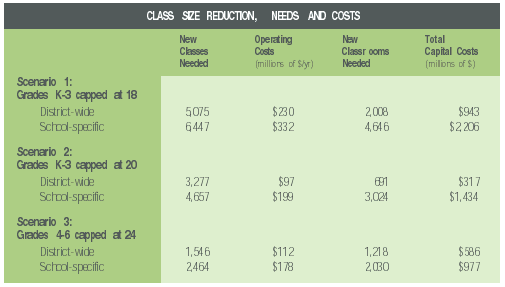 The report estimated the cost of reducing class sizes in all elementary classes throughout the city according to three scenarios and two different approaches. Incorporating class-by-class enrollment data from the Board of Education, existing plans for school construction, and expected state aid, IBO mapped out the cost to the city for capping K-3 class size at 20 (the state's goal is for class sizes to average 20), capping K-3 class size at 18, and capping 4-6 grade class size at 24. For each of these scenarios, the analysis examined the costs if students were either shifted to under-utilized schools within the same district or kept at their same school. IBO found a significant difference between the number of new classrooms needed under the district-wide approach and the number required following the more costly school-specific approach. For example, under the district-wide approach, $230 million would be needed in additional annual operating expenses and a total of $943 million in capital expenditures to reduce all K-3 classes in the city to a cap of 18 students. In contrast, under the school-specific scenario-leaving all students in their current buildings-an 18 student cap would cost $332 million in annual operating expenses and $2.2 billion in capital spending.
 |
 n a study commissioned by Public Advocate Mark Green, the Independent Budget Office uncovered a wide disparity in city public school class sizes for kindergarten through the third grade.